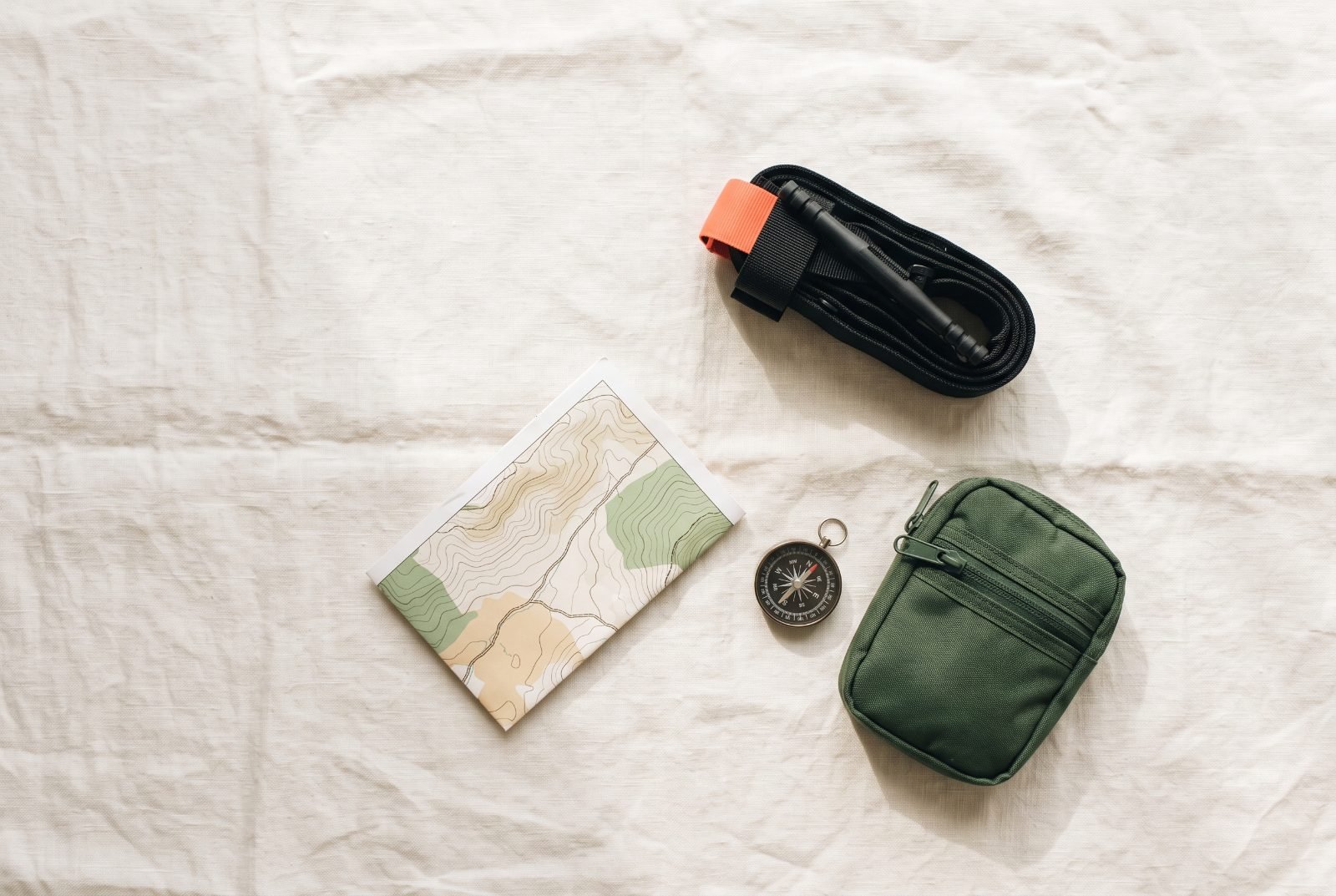
If you carry one piece of trauma gear into the backcountry, make it a tourniquet. Severe bleeding from an arm or leg can kill in minutes, far faster than any rescue can reach you on a trail. A real tourniquet, applied correctly, stops it.
The catch: the tourniquet market is full of junk. Search “tourniquet” on Amazon and some of the first results are cheap knockoffs that look right but can snap the moment you crank them down. Here’s which ones are worth carrying, and how to make sure you get a real one.
The short answer
- Best overall: North American Rescue C-A-T Gen 7 Check price →
- Easiest to apply correctly: SAM Extremity Tourniquet (SAM-XT) Check price →
- Most rugged: SOF Tactical Tourniquet – Wide (SOFTT-W) Check price →
All three are on the CoTCCC recommended list, the standard I use.
Why the CoTCCC list matters
The Committee on Tactical Combat Casualty Care (CoTCCC) is the U.S. military group that reviews trauma gear against real-world and research evidence. It publishes a short list of recommended limb tourniquets. The current list dates to December 2021 and includes:
- C-A-T (Combat Application Tourniquet) Gen 7, and Gen 6 until replaced
- SAM Extremity Tourniquet (SAM-XT)
- SOF Tactical Tourniquet – Wide (SOFTT-W)
- Tactical Mechanical Tourniquet (TMT)
- TX2 and TX3 ratcheting tourniquets
- Ratcheting Medical Tourniquet – Tactical (RMT-T)
A tourniquet not being on the list doesn’t automatically mean it fails. But the ones on it have the evidence behind them, and when it’s your leg, that’s the bar.
1. North American Rescue C-A-T Gen 7 — Best overall
The C-A-T is the tourniquet the U.S. military issues, and the one you’ll most likely see in first-aid classes and on ambulances. It uses a windlass, a rigid rod you twist to tighten the strap, and it’s designed so you can apply it one-handed to your own arm.
Why I’d carry it: It’s the most proven and most widely trained-on tourniquet out there. If a bystander or a ranger grabs your kit, this is the one they’re most likely to know.
Watch out for: It’s also the most counterfeited tourniquet on the market (see below). Genuine Gen 7s generally run about $27–39.
2. SAM-XT — Easiest to apply correctly
The SAM-XT adds a smart buckle that locks the strap at the right starting tension before you twist the windlass. That takes the guesswork out of the step people most often get wrong: not pulling the strap tight enough before cranking.
Why I’d carry it: For someone with limited training, or a kit you hand to a hiking partner, that buckle makes a real difference.
Trade-off: It’s a bit less common, so fewer people have practiced with it.
3. SOFTT-W — Most rugged
The SOF Tactical Tourniquet – Wide uses a metal windlass and a wide strap. It was one of the first two tourniquets the military recommended in the mid-2000s, along with the C-A-T, and it has a long track record.
Why I’d carry it: The metal construction holds up to being crushed at the bottom of a pack for years.
Trade-off: It takes a little more practice to apply one-handed than the C-A-T.
What about the SWAT-T?
The SWAT-T is a thick, stretchy rubber band. It’s versatile: it doubles as a pressure wrap and works on limbs too small for a windlass tourniquet, like a young child’s arm. But it is not on the CoTCCC list as a primary tourniquet. Carry it as an extra, not as your only one.
How to avoid a fake tourniquet
Counterfeit C-A-Ts are a real, documented problem, and they’ve failed on actual patients. New Hampshire EMS issued a statewide alert after suspected fakes broke while a crew was treating an injured motorcyclist, and North American Rescue has said it identified at least six different counterfeit versions sold online.
- Check the price. If a “C-A-T” costs under about $20, assume it’s fake.
- Check who’s selling it. On Amazon, look at the “Sold by” line. Buy from North American Rescue or a known authorized medical dealer, not a random third-party seller.
- Check the buckle. The genuine Gen 7 has a single-routing buckle with raised “CAT” lettering. Fakes rarely copy it well.
- Check the windlass. A real one feels rigid. If the rod flexes or feels hollow, don’t trust it.
- Skip brands you’ve never heard of. Generic multi-packs are fine as cheap trainers, never for your actual kit.
Practice with it
Practice is what makes a tourniquet work. Train until you can get one on your own arm and leg fast, one-handed. Many people keep a separate tourniquet just for practice, so the one in their kit stays sealed, clean, and ready.
How many should you carry?
At least one per person on the trail, and two in a car kit, since injuries often involve more than one limb. Store them where you can reach them fast, like a hip-belt pouch or the top lid of your pack, not buried under your sleeping bag.
Get trained
A tourniquet only works if it’s applied fast and tight enough to stop the bleeding. Practice with a trainer until you can get one on your own arm and leg quickly, and get hands-on bleeding-control training from a qualified instructor before you rely on one.
This article is for general information and isn’t medical advice. Get hands-on training before relying on any trauma gear, and call 911 in an emergency.